Solar Faq
Home – Solar Faq
FAQ's
Frequently Asked Questions About Solar
Solar Energy Basics
Solar energy is increasing in popularity as more and more people consider solar panels to power their homes or businesses. Here are some of the most basic questions that we get asked about solar.
The sun shines down on the solar panels. Inside the panels, photons cause electrons to separate from their atoms and create direct current (DC) energy. A device connected to the solar panels, called an inverter, then transforms this DC power into the alternating current (AC) we use as electricity. From there, the electricity produced by OneGrid Energy Integration’s solar panels enters our homes and businesses the same way electricity from the local power grid does.
A solar panel’s current estimated lifespan is 35–40 years, which is in line with the lifespan of most premium residential roofing materials. However, most manufacturers recommend that their panels be replaced when their efficiency drops below 80%—which usually happens after the 30-year mark—well beyond the estimated payback period for your solar photovoltaic investment, according to OneGrid Energy Integration.
It’s impossible to set a one-size-fits-all price on solar installation. Each property has its own energy needs and design configurations to take into account. How many panels are needed to cover all the energy requirements for the property? Can that number of panels fit on the roof? Should ground-mounted solar be a consideration? Are there trees or other larger buildings nearby that could cast a shadow on your panels? The only way to find out how much solar panels could cost for your property is to get a custom evaluation from OneGrid Energy Integration.
Most people will save money in the long run by going solar instead of paying for their utility. To get more specifics about the payback period of solar, you will need to get a custom solar evaluation from OneGrid Energy Integration.
This depends on your individual energy needs and your property’s unique features. In many cases, OneGrid Energy Integration can design solar energy systems that cover all of a property’s daily energy needs. That said, sometimes it’s also worthwhile to install a solar array that partially covers the property’s energy needs. Even a small system can help a property owner save money or reduce their carbon footprint.
That depends on various factors, including the size of the proposed location for the solar panels, the property’s energy usage, solar incentives, net metering agreements, and more. Typical timeframes can range between eight and 15 years but could be sooner. When your solar project is designed by OneGrid Energy Integration, it will include a customized payback timetable.
Solar Power Myths
Solar energy has its share of myths. Many “new” or novel products and services are surrounded by misinformation, which is usually based on assumptions, not facts. Believing these myths could be costing you money.
When it comes to the expense of getting started with a solar installation, you won’t need to come up with a big down payment. In fact, often times you won’t have to come up with anything because many financing options for both residential and commercial solar projects through OneGrid Energy Integration offer installations for zero money down.
There isn’t a significant sunlight difference between some traditionally “warm-weather” regions and some “cold-weather” regions. Minneapolis has the same number of sunny days as Jacksonville, Florida. Boston has a similar number of sunny days as Birmingham, Alabama. The Midwest and the Northeast get plenty of sun, and various government incentives for installing solar make the deal that much more attractive with OneGrid Energy Integration.
Many utilities offer net metering, a process by which the excess energy from your solar panels is sent back into the grid in exchange for credits on your utility bill. Thanks to net metering, you can over-produce electricity during the sunniest times of the year and have a surplus of credits to fall back on when your system is in a low-production mode. OneGrid Energy Integration helps homeowners take full advantage of net metering by ensuring their systems are optimized for maximum efficiency and savings.
This myth stems from the idea that the cost of solar installations will continue to decrease. While it’s true that costs have dropped significantly over the years, recent manufacturing and supply chain volatility has proven that we can’t expect prices to always decrease. Even as technology increases efficiency, the prices charged by installers and component manufacturers can only go so low. Waiting could also mean missing out on incentives that make solar more affordable — something OneGrid Energy Integration helps customers take advantage of today.
This myth likely arose from isolated incidents in which solar panels were incorrectly installed on roofs that were already compromised. The truth is, properly installed solar panels (i.e., connected to the rafters) actually help to strengthen the roof by providing extra bracing support. A good installer will send out engineers to inspect every inch of your roof. A credible firm would never set up panels on a faulty roof.
If you were to purchase all the PV system components, learn how they work, and then perform the installation yourself, “complex” and “confusing” definitely would be two words to describe your experience. Fortunately, you don’t have to do this. OneGrid Energy Integration has a proven process to make switching to solar easy. We’re ready to guide you through the complexities and will walk you through each step of the path to your solar dreams.
Solar for Business
Solar power is surging within the commercial market as business owners learn more about the multiple benefits of solar energy. Here are some of the most common questions about solar for business.
Solar helps your business reduce operating costs by lowering the monthly energy costs to keep the property running. These returns are realized for decades and increase as retail rates rise from utility providers. There are also generous upfront tax incentives and depreciation credits, which help most projects lead to payback in a few years rather than a few decades, as with other types of capital investments. Renewable energy investments are very promotable and drive awareness around the business’ commitment to clean energy and overall energy efficiency which all contribute to employee retention and customer loyalty.
OneGrid Energy Integration commercial solar systems reduce electricity bills by offsetting a building’s energy use with power generated from solar panels. This offset can result in significant savings across the lifetime of the system (40–50 years), helping businesses lock in energy costs for decades to come. Electricity rates have risen consistently over the last 20 years, and this trend is expected to continue to a greater degree than ever before. Commercial solar installations from OneGrid Energy Integration protect against rising energy costs from the day the system is turned on through the end of its lifespan, yielding decades of predictable, clean energy savings for your business.
Solar’s environmental impact on the communities around us and the world at large is now more important than ever, and many businesses are looking forward to committing to a more sustainable future through increased clean energy investment.
Businesses can reduce greenhouse gas emissions by using solar energy to offset fossil fuel-based electricity provided by most utilities, which reduces air pollutants like sulfur dioxide, carbon dioxide, and particulate matter, which have been shown to cause health problems and contribute to the climate crisis.
Incentives for commercial solar are varied, and can depend on project type, location, participating business or other utility offerings. Various federal and state government programs support businesses that choose to invest in solar energy through a variety of solar credits, rebates, and other incentives.
- The 2022 Inflation Reduction Act (IRA) was a critical piece of bipartisan legislation passed recently that has bolstered tax benefits for all kinds of potential system owners here in the US.
- Property Assessed Clean Energy (PACE) is a financing program that offers qualifying businesses interested in solar access a low-interest, short-term loan with deferred payments to improve cash flow.
- The Rural Energy for America Program (REAP) offers grants to farms and businesses in rural communities to invest in renewable energy systems and energy efficiency improvements.
There may also be additional incentives offered by your local community or even utility provider, all of which your solar partner can help identify.
Certain incentives are also available for nonprofits now through the IRA, opening the door to improved returns for many properties that were previously exempt from earning any federal funding towards renewable energy system investments.
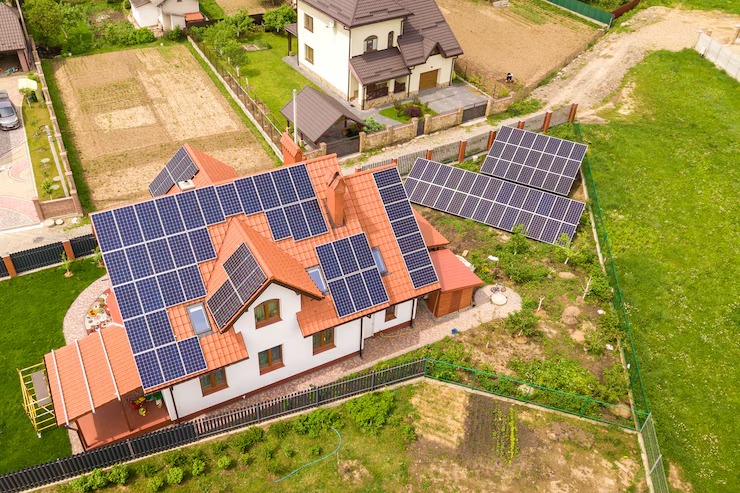
You must own the building or gain approval from the building owner to install solar on your commercial property. After that is taken into consideration, nearly any building can be suitable for solar, so long as the roof is structurally sound and has enough space for panels and the racking needed to mount them. For properties with limited roof space, ground-mounted systems or solar carports can be a good alternative as well.
Businesses of all sizes and in varied industries are switching to solar energy. From local corner stores and family-owned farms to companies with locations across multiple states and international brands, the value that can be found in clean and sustainable energy solutions is not restricted by categories or borders.
Nonprofits are also switching to solar, now that rules and incentives have been updated. Solar can really be for any business, but the only way to find out is to get a professional evaluation from a solar expert.